


Navajas
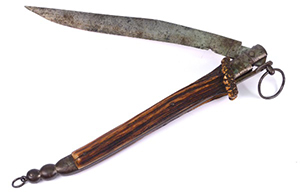 Navajas are traditional Spanish folding knives. Though best know for fighting and personal defense, Navajas were used for everything from cutting lines, peeling fruit and shaving. They were even used to perform surgery. Over time a locking style blade with a backspring evolved. These knives were called Navaja de Muelles (Spring Knives). A metal pull ring to release the lock was added in the late 18th century. The ring was eventually discarded in favor of a lever. This style of Navaja is sometimes called a "tail rattler" (cola de crotalo), because the tip of the handle resembles a rattle snakes tail.
The navaja is a traditional Spanish folding knife that originated in the Andalusia region during the late 1600s. Historically, it served as both a versatile utility tool and a concealable self-defense weapon for commoners after laws restricted the carrying of swords
Key Traditional Features
A classic navaja is defined by several distinct characteristics that set it apart from modern pocket knives:
- The "Carraca" (Ratchet Lock): Perhaps its most famous feature, this locking mechanism produces a distinctive ratcheting sound (a series of clicks) as the blade opens. This sound was historically said to serve as a warning to an opponent.
- Curved Blade and Handle: The blade is often long and slender with a prominent clip point, while the handle typically features a graceful downward curve.
- Traditional Materials: Handles are commonly crafted from natural materials like bull horn, bone, or wood, sometimes reinforced with brass or steel liners.
- Size Variety: While many are pocket-sized for everyday carry (EDC), some historical fighting models were massive, nearly the length of a forearm when unfolded.
YouTube +5
Historical Context
- Origins: The name comes from the Latin novacula, meaning "razor," as the design was influenced by traditional straight razors.
- Cultural Significance: By the 19th century, it was a symbol of Spanish identity carried by all social classes, from peasants and sailors to the aristocracy and clergy.
- Manufacturing Hubs: Traditionally, the best-known navajas come from Spanish cities with deep bladesmithing roots, such as Albacete, Toledo, and Santa Cruz de Mudela.
Wikipedia +5
Where to Find Them
If you are looking for authentic or modern versions, several Spanish and international brands continue the tradition:
- Traditional Spanish Brands: Manufacturers like Joker and Nieto (based in Albacete) produce high-quality classic and tactical models.
- Modern Interpretations: Brands like Spyderco and Cold Steel have created modern "Navaja" style folders that utilize contemporary steels and locking mechanisms while honoring the traditional aesthetic.
- Specialty Retailers: You can browse wide selections at specialized shops like Cuchillería Simón or Cuchillería el Artesano.